

Searching for Alibarbar vape Australia reviews can bring up confident ratings, feature lists and buying conclusions. The useful question is not whether a page sounds positive or negative. It is whether each claim shows enough evidence for the conclusion it asks you to accept.
A review can be accurate in one area and weak in another. A page may identify a genuine package but provide no evidence for battery duration. It may quote a manufacturer specification correctly but never explain whether the writer observed the result. It may disclose a commercial relationship yet still use a sound method. The checks below help keep those questions separate.
Start with the claim, not the overall rating
A single score compresses several different questions into one number. Before trusting it, rewrite the statement you care about as a specific claim. For example:
- Is the writer describing the exact Alibarbar model and version shown?
- Was the feature directly observed, or copied from a product description?
- Does an authenticity check apply to this package?
- Is the publisher independent, sponsored or commercially connected?
- Does the page provide current evidence about lawful Australian supply?
Each question needs a different type of evidence. A pass at one step does not prove the others.
A five-step evidence ladder for Alibarbar reviews
| Check | What a stronger review shows | What remains unproven |
|---|---|---|
| 1. Publisher and relationship | Names the publisher and discloses sponsorship, incentives, affiliate links or a seller relationship. | Disclosure alone does not prove that every claim is accurate. |
| 2. Exact model and version | Identifies the model, version, packaging and source closely enough to know what was assessed. | A finding about one unit or version does not automatically apply to every Alibarbar product. |
| 3. Observation versus specification | Separates direct observations and stated methods from manufacturer or seller specifications. | A repeated specification does not prove the reviewer measured or observed the result. |
| 4. Authenticity scope | Uses the manufacturer’s current support or verification route and reports only what that check covers. | Authenticity does not establish performance, contents, safety, TGA compliance or lawful supply. |
| 5. Australian supply | Checks current Australian Government and TGA guidance separately from product or packaging claims. | Retail availability, a positive review or a genuine package does not by itself prove lawful Australian supply. |
Check who published the review
Start by identifying the publisher and any commercial relationship. The Australian Competition and Consumer Commission warns that fake reviews, suppression of genuine negative reviews and undisclosed commercial relationships or incentives can mislead consumers.
A commercial relationship does not automatically make a review false. It changes the context in which the evidence should be read. A useful page explains whether the product was supplied, whether the publisher sells it, whether an incentive was offered and how the conclusion was reached. Missing disclosure is a reason to lower confidence, not a reason to invent an accusation about a particular publisher.
Also look beyond the final verdict. If a page contains only praise, check whether it explains limitations, inconsistent results or the conditions under which a claim applies. Balanced evidence does not require artificial negativity, but it should leave room for uncertainty.
Confirm the exact model and version
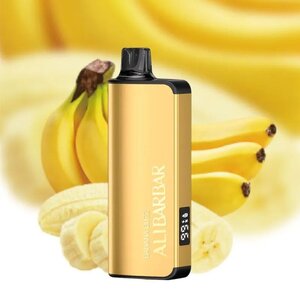
Alibarbar is not one interchangeable item. Claims should identify the exact model or version being discussed. Packaging, product names and listed specifications can change, and a statement about one unit should not be silently extended to an entire brand.
A stronger review records enough detail for a reader to understand its scope. That may include the model name shown on the package, the version presented by the source and when the information was checked. A vague statement such as “Alibarbar lasts longer” has no useful comparison boundary unless the review explains longer than what, under which method and for which exact device.
This site maintains separate pages for product and brand information, but that inventory is not a substitute for manufacturer evidence or direct testing. It is used here only to prevent a broad brand claim from being treated as though every model were identical.
Separate direct observation from copied specifications
There is nothing inherently wrong with quoting a manufacturer specification when it is clearly attributed. The problem begins when a specification is written as if it were an observed result.
Look for method details. If a review makes a performance claim, does it say what was measured, how it was measured, how long the assessment lasted and what limitations applied? If it simply repeats a listed feature, confidence should stop at “the source states this specification”. It should not jump to “the reviewer verified this outcome”.
This distinction is especially important for puff counts, battery duration and flavour descriptions. Without a stated method, a precise number can still be a copied claim rather than an independent finding.
Use authenticity checks for their actual purpose
Alibarbar provides support and product-verification routes. These may help a reader check whether package information is recognised by the manufacturer’s system. Use the current instructions on the official support page, because verification methods can change.
Keep the result narrow. A successful authenticity check does not prove that a reviewer is independent. It does not establish real-world performance, confirm all contents, demonstrate safety, show TGA compliance or establish lawful Australian supply. Those are separate questions with separate evidence requirements.
Likewise, a failed or unavailable check needs careful interpretation. It may justify contacting the manufacturer through an official support route, but it should not be expanded into a claim that has not been verified.
Keep Australian supply rules separate
Australian Government guidance states that all vapes are regulated as therapeutic goods and that lawful supply follows the participating-pharmacy pathway for therapeutic purposes. The Therapeutic Goods Administration provides current information for individuals and patients about access and requirements.
That legal question cannot be answered by a product rating, a seller’s stock page, a package code or a manufacturer’s authenticity result. When supply matters, check the current Australian Government and TGA guidance directly. For the separate task of assessing a seller, use the site’s guide to checking a vape shop in Australia. Purchase-location intent is covered separately in the Alibarbar Australia buying guide.
Red flags that reduce confidence
- No clear publisher, date or exact model.
- A score or winner is presented without a method.
- Manufacturer specifications are written as firsthand observations.
- Sponsorship, incentives, affiliate links or seller relationships are not explained.
- An authenticity result is used to claim performance, safety, compliance or legality.
- Australian legal claims rely on a retailer page instead of current government guidance.
- Precise performance conclusions appear without conditions, limitations or evidence.
One red flag does not prove deception. It tells you where the evidence chain is weak and where confidence should be limited.
How to check a claim step by step
- Copy the exact claim. Avoid judging a whole page at once.
- Identify the source. Note who published it and any disclosed commercial relationship.
- Match the exact product. Confirm the model and version to which the claim applies.
- Classify the evidence. Is it a direct observation, a stated test, a manufacturer specification, an authenticity result or a legal source?
- Check the scope. Record what the evidence proves and what it does not prove.
- Verify Australian rules separately. Use current government and TGA sources for supply questions.
This process may leave some claims unresolved. That is a valid result. A responsible review does not need to turn every uncertainty into a confident buying conclusion.
Conclusion
The most useful Alibarbar vape Australia reviews are transparent about who published them, which exact product they cover and how each conclusion was reached. They separate observations from specifications, keep authenticity checks within their proper scope and treat Australian supply rules as a distinct question.
Use the five-step evidence ladder claim by claim. Trust only what the available evidence actually supports, and return to current Australian Government guidance whenever a statement concerns access, supply or regulation.





Leave a comment